Blogs
Garbage In, Garbage Out: Why Better Freight Data Starts With Better Workflows
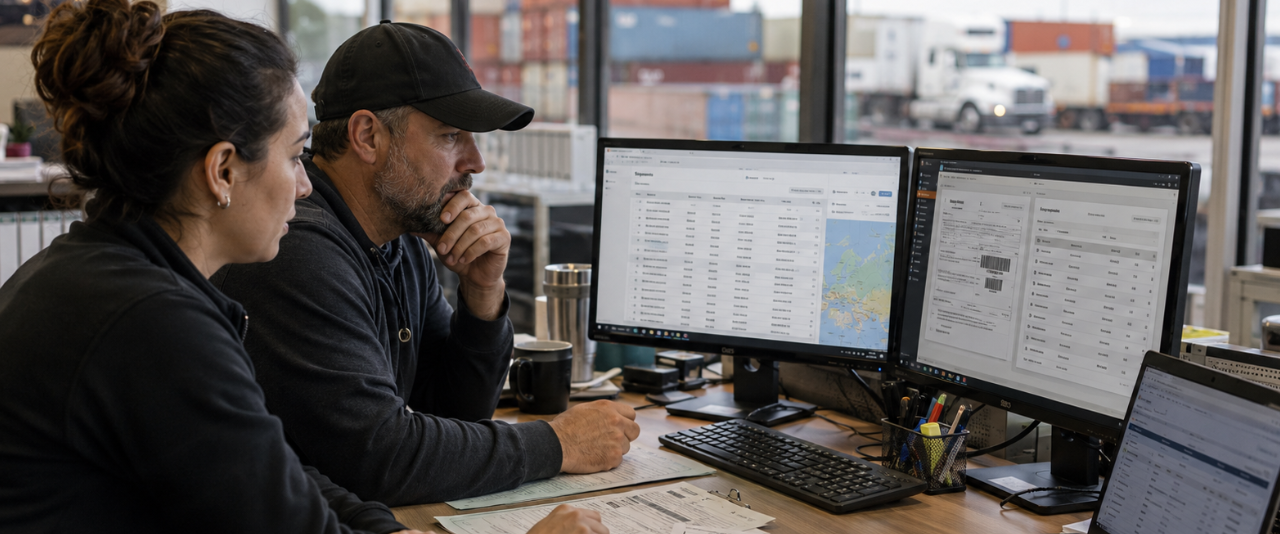
At the start of a busy day, freight teams are often doing a small amount of detective work before they can make a decision.
The latest customer instruction may be sitting in an email thread. An amended invoice may have been saved in a shared folder. A forwarding system shows one milestone, while the handover spreadsheet says something slightly different.
None of this means people are careless. It is often what happens when an operation grows over time. New customers, systems, processes and reporting requirements are added, while the old ways of working remain in place because they still get the job done.
But it does create a problem when businesses begin looking at AI.
AI can extract information from documents, surface an exception or help prepare a customer response. What it cannot reliably do is decide which of several incomplete records tells the full story. It can move quickly, but it still needs a dependable view of the job.
That is why better freight data starts with better workflows.
The problem often begins before the data
Data quality is often treated as a data-entry issue. Teams are asked to be more careful, complete more checks or add another review before a shipment moves forward.
Those things can help, but they do not always address the real cause.
The problem may begin with how an instruction is received, where it is recorded and whether the update reaches every part of the workflow that depends on it. A customer change made late in the afternoon can easily become tomorrow morning’s problem if there is no clear place for it to live.
Good data is not simply accurate when it is entered. It also needs to be complete, current and easy for the right people to find.
For freight teams, that usually means answering a few practical questions. Where is the official record for this shipment? Who owns an update when something changes? Can someone see when information was last checked? And can they trace a decision back to the original document or instruction?
When those answers are unclear, even good information becomes difficult to trust.
Clear workflows reduce the chances of bad data
The most useful improvements are often not dramatic.
Capturing a shipment detail once, rather than retyping it across several systems, reduces the chance of mismatched records. Making one version of a customer instruction clearly visible saves people from searching through old email threads. Linking documents, milestones and notes gives operators more of the context they need before they act.
The same applies to exceptions. Freight is full of late documents, changed instructions, missing values and details that do not quite match. A strong workflow does not assume these problems will disappear. It makes them visible early enough for someone to deal with them.
That is a more practical way to think about data quality. It is less about asking people to work harder and more about making the right action easier to take.
The wider industry is already moving in this direction. Better standards and connected information flows are becoming more important because goods cannot move smoothly when the information around them is delayed, inconsistent or held in the wrong place.
AI becomes more useful when the work around it is clear
AI does not remove operational friction by itself. In many cases, it makes the friction easier to see.
If a shipment record is spread across disconnected systems, the tool will encounter the same gaps and contradictions that operators deal with every day. If the latest instruction is unclear, AI cannot turn that uncertainty into certainty.
What it can do is help teams spend less time on the repetitive parts of the work.
It can extract details from documents, identify missing information, flag unusual values and bring the most urgent issues to the surface. It can give people a quicker starting point, especially when there is a clear process behind the information it is working with.
That still leaves room for human judgement, which matters in freight. Someone needs to understand the customer context, decide how to handle an exception and take responsibility when the situation is not straightforward.
The aim is not perfect data before AI can be used. Very few freight businesses begin there.
The more useful starting point is to look at one workflow and ask where information becomes difficult to trust. It may be a handover process, a document check, a customer update or the point where a change is passed between teams.
Often, the answer is not another layer of technology. It is a clearer process, fewer duplicate steps and a more obvious place for the latest version of the truth.
That work may not look like an AI project at first. But it is what gives AI something useful to build on.
ALSO READ:
- DCSA (Digital Container Shipping Association): Interoperability & efficiency: Imagine a fully interoperable trade ecosystem
- UN Trade & Development: Digitalization of multimodal data and document exchange using UN standards in electronic corridors
- NIST’s AI Risk Management Framework: Artificial Intelligence Risk Management Framework